Choosing a microphone is an important decision that can greatly affect the quality of your music productions. Drawing on a survey of 3,272 music producers, this article explains the differences between dynamic and condenser microphones, polar patterns, and essential accessories. From beginners recording vocals or acoustic instruments to professionals building more advanced setups, readers can learn practical ways to choose a microphone for their workflow and set it up correctly.
What microphones do beginners and professionals prefer? We asked 3,272 music producers
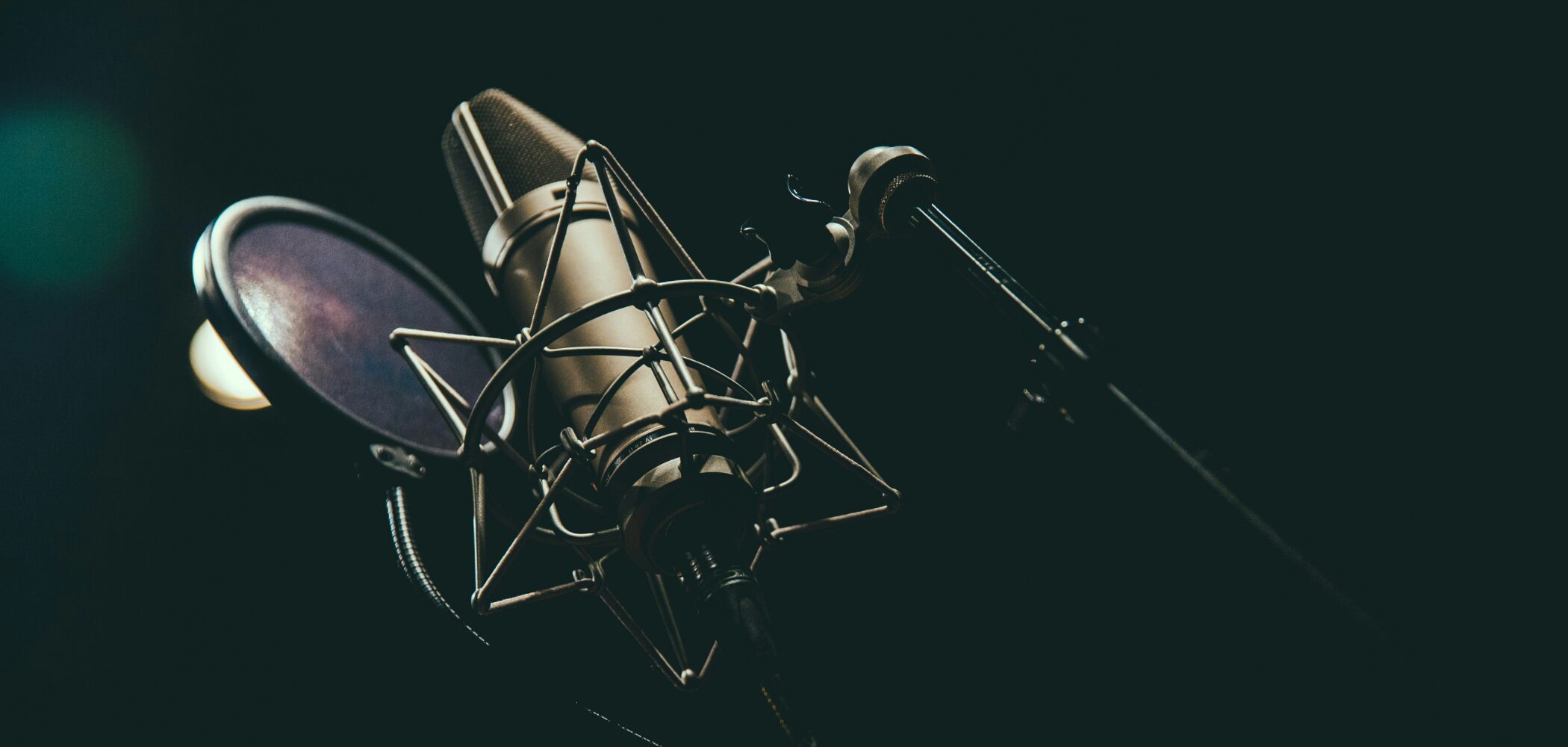
The microphone you use can make a significant difference to the quality of your productions, especially vocals and acoustic instruments.
But with so many types and price points, it is easy to wonder which one is right for you and how condenser and dynamic microphones differ.
Here we cover the basics of choosing a microphone, practical setup tips, and popular products selected by 3,272 music producers.
Video: Which microphone is number one? The top five chosen by 3,272 people (2020 edition)
Do you need a microphone for music production? Survey findings

We are often asked whether a microphone is necessary for music production.
Interestingly, in our survey, 941 amateurs and 63 professionals said they did not use a microphone.
This suggests that advances in software instruments and vocal production software such as Vocaloid have helped establish workflows that do not necessarily involve recording live sound.
As the results show, a microphone is not essential for every production style.
However, if you want to add a live performance, such as your own voice or an instrument, a microphone remains essential.
Microphone basics
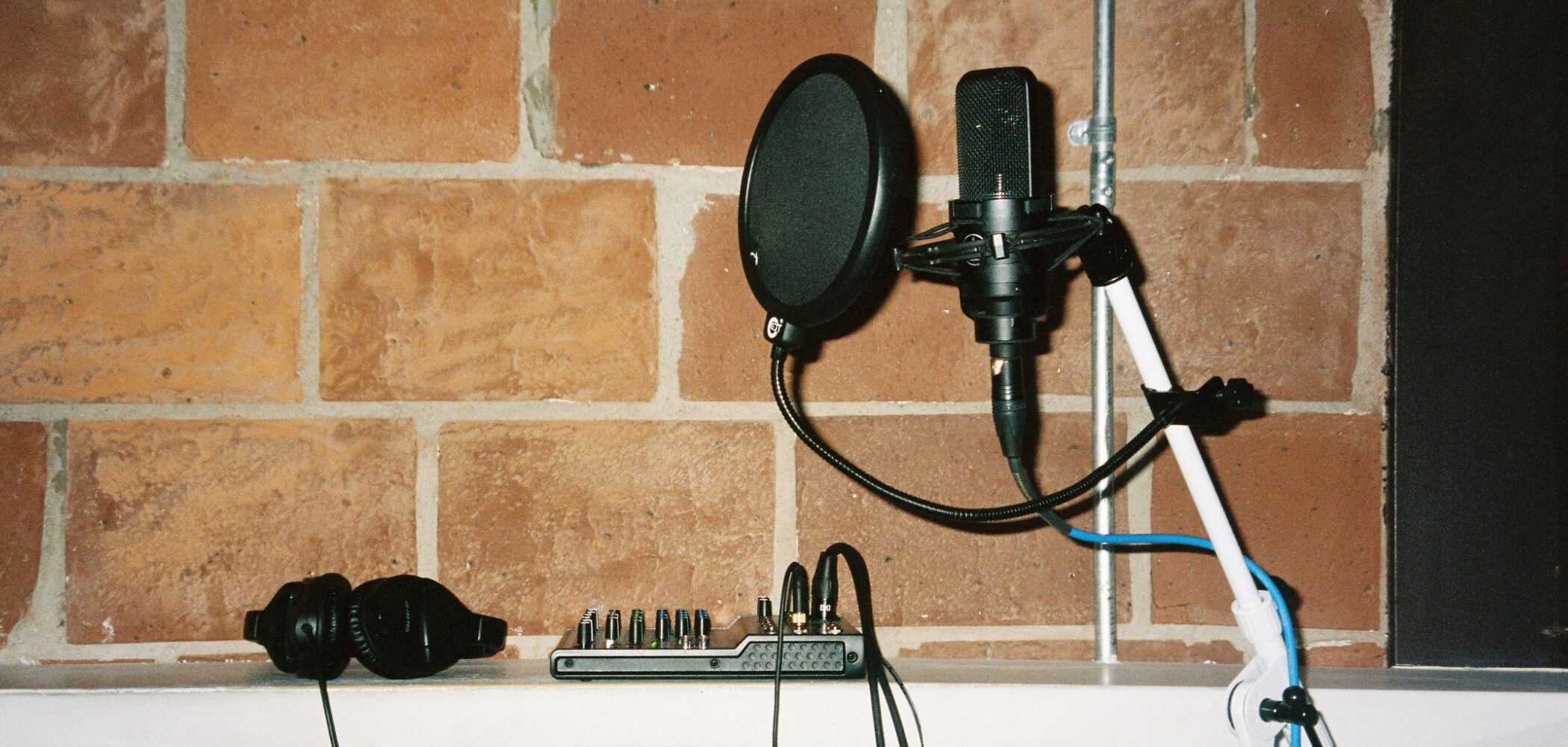
Understanding the basics can help you make a good choice.
Let's look at the main types of microphone and polar patterns, which describe the directions from which they pick up sound.
Main types: dynamic and condenser
The two main types are dynamic and condenser microphones.
Each has distinct characteristics that affect recording and ease of use.
Dynamic microphones
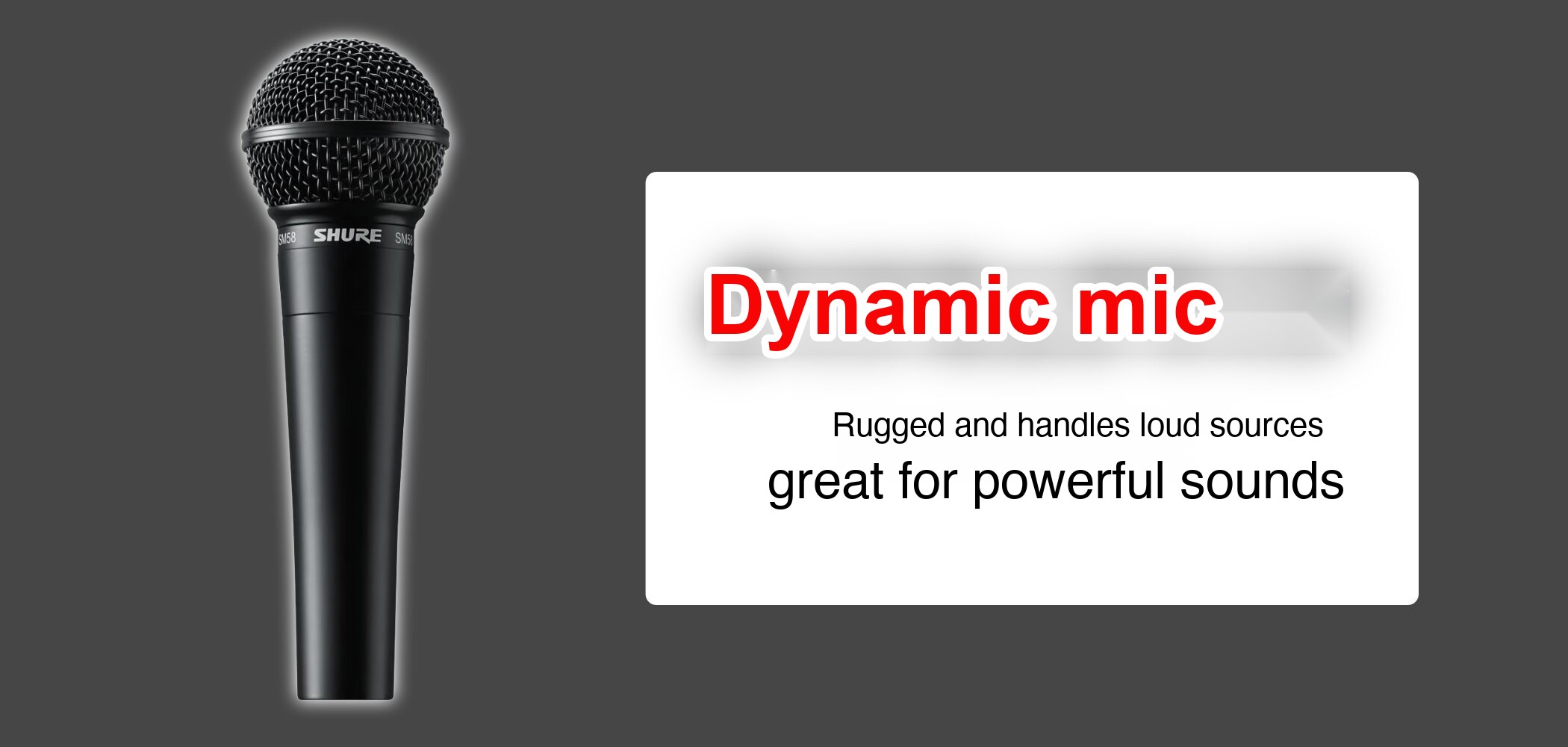
A dynamic microphone's main strengths are its durability and ability to handle loud sounds without distortion.
Many are designed to capture sound from the front and are widely used for live performances and karaoke.
Their robust character makes them valuable when recording energetic sounds with their impact intact.
They are particularly suitable for amplified guitar or bass and percussive instruments with a strong attack.
Condenser microphones

Condenser microphones are sensitive enough to capture subtle details such as breath clearly.
They are the most common type in conventional recording studios.
Their bright, clear sound can stand out in a mix, making them well suited to expressive vocals and acoustic guitar.
Condenser microphones are delicate, however, so protect them from impacts and moisture.
They also require power; for a typical studio condenser, the audio interface needs to provide +48 V phantom power.
Polar patterns: capturing the sound you want

A polar pattern describes the directions from which a microphone is most sensitive to sound.
There are several patterns, and cardioid is the most common for home recording.
- Cardioid: the standard front-facing pattern, useful for recording vocals and instruments at home.
- Supercardioid: more focused pickup with good rejection at the sides and some pickup directly behind, useful in live situations requiring isolation.
- Bidirectional: picks up sound from the front and back, useful for face-to-face conversations and certain stereo techniques.
- Omnidirectional: picks up sound from all directions, useful for meeting recordings or capturing the atmosphere of a space.
Some higher-end condenser microphones let you switch between these polar patterns.
Beyond the microphone: equipment for recording
A few accessories can help you make clear recordings.
The following are especially useful to consider when buying a microphone.
Pop filter

A pop filter is a filter that reduces noise caused by bursts of air from plosive sounds such as “p” reaching the microphone directly.
It is especially helpful with a condenser microphone that captures delicate details such as breath.
Microphone stand

A stand holds the microphone securely.
Holding a microphone during recording can cause handling noise and changes in sound.
Choose a stable stand that can support the microphone's weight.
Cables
Different cables serve different purposes; using the wrong one can cause noise or prevent equipment from working correctly.
Microphone cable (XLR cable)
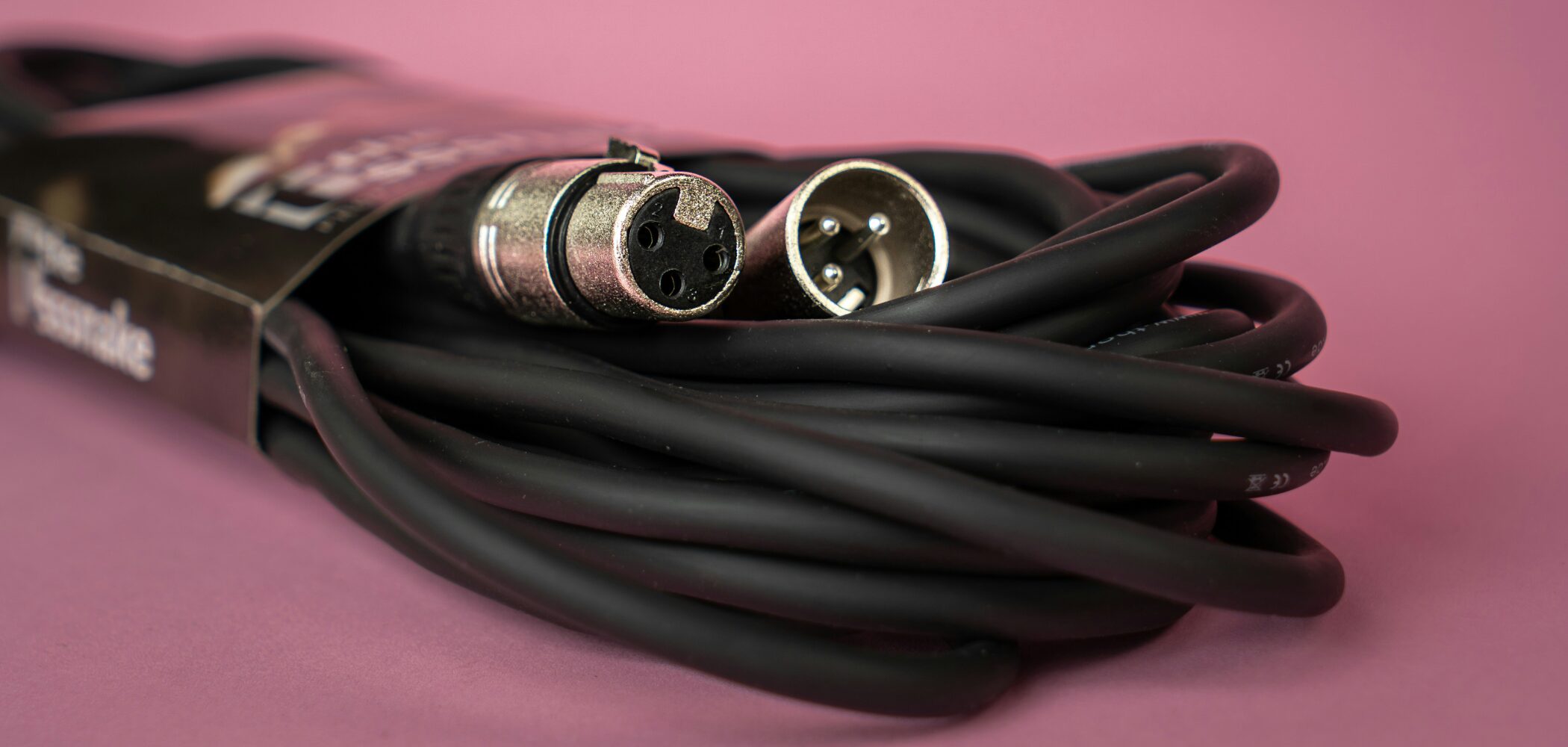
This cable connects a microphone to an audio interface.
Its balanced connection resists noise, and phantom power can also be supplied through it to a condenser microphone.
Instrument cable (shielded TS cable)
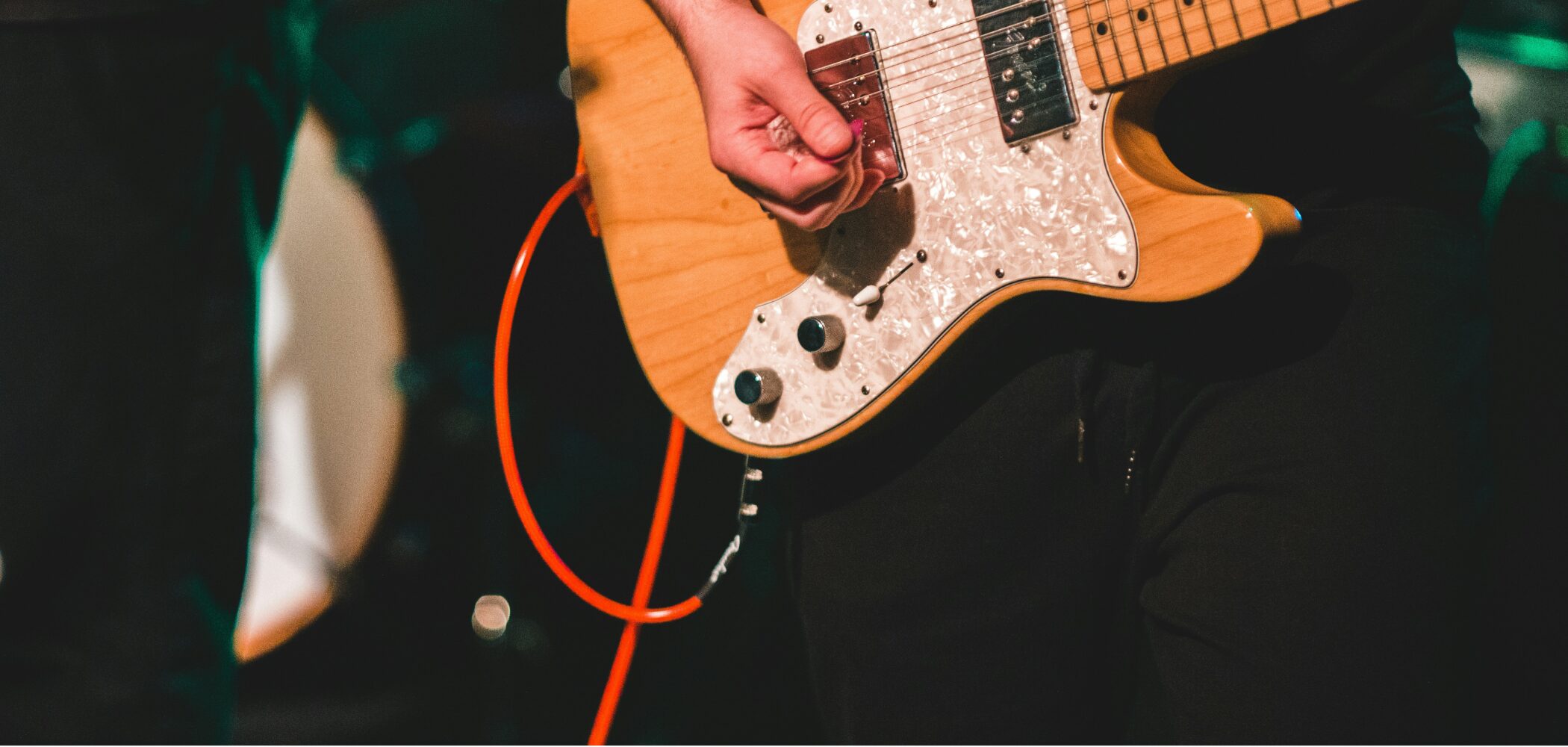
This cable connects instruments such as electric guitars, basses, and synthesizers to an audio interface.
It uses an unbalanced connection that is more susceptible to noise and has a different connector from a microphone cable, so it is not used for a standard XLR microphone connection.
In practice: basic vocal recording setup
Before the rankings, let's look at how to set up a microphone properly.
We will use vocal recording to explain the key steps.
Step 1: Set microphone height, distance, and orientation

First, adjust the front, or pickup side, of the microphone to match the height of the singer's mouth.
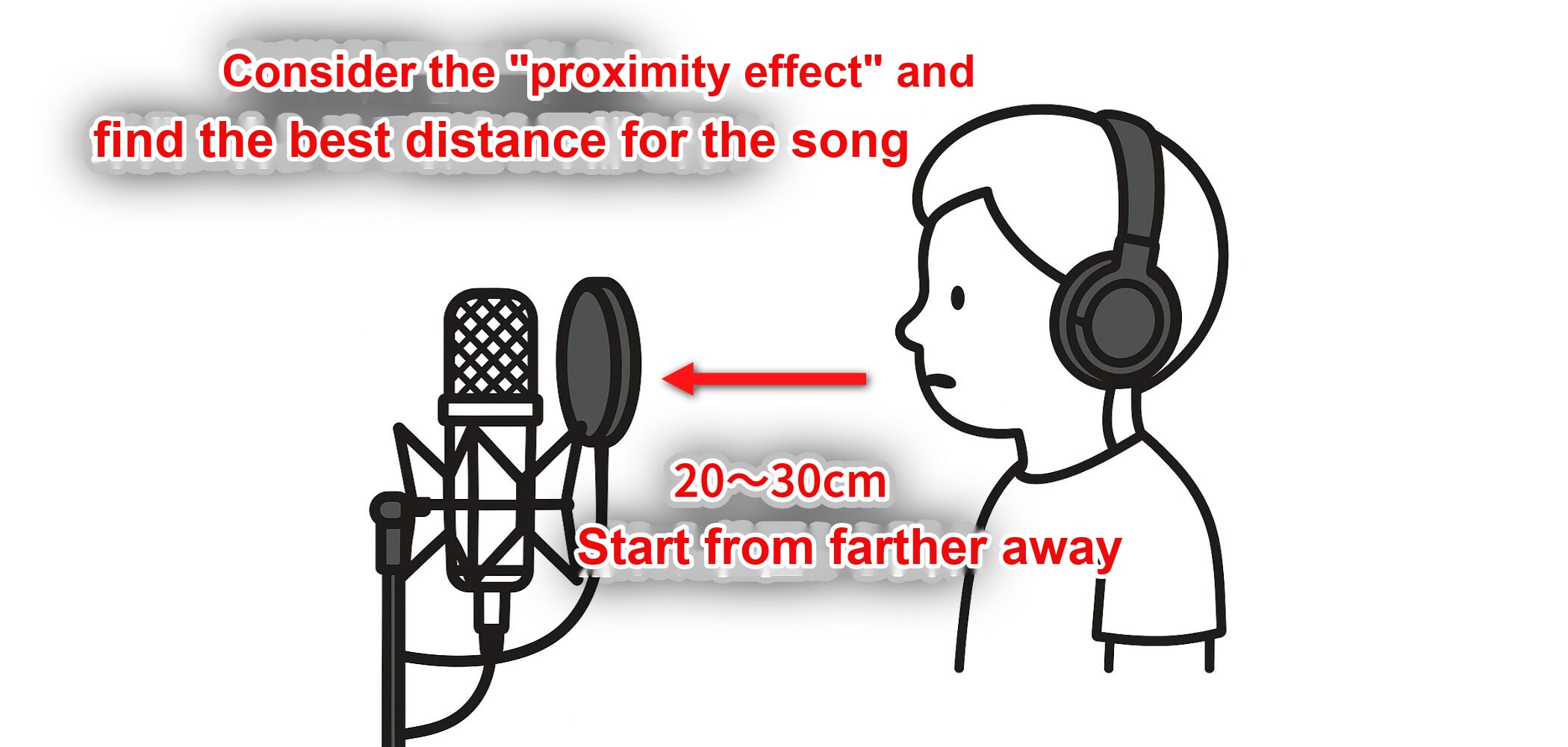
Start by trying a distance of 20–30 cm (about 8–12 inches).
Remember that moving closer can emphasize low frequencies through the proximity effect.Experiment to find the best distance for the song.

Microphones have front and back sides.
Use the manufacturer's logo or marking (the gold dot in the example) as a guide and face the front toward the singer's mouth.
Step 2: Adjust gain (input level)

Adjust the gain knob on the audio interface to set the input level.
Sing the loudest part of the actual song, and set the level so it does not exceed 0 dB or clip, even at that volume.
Step 3: Turn on phantom power for a condenser microphone
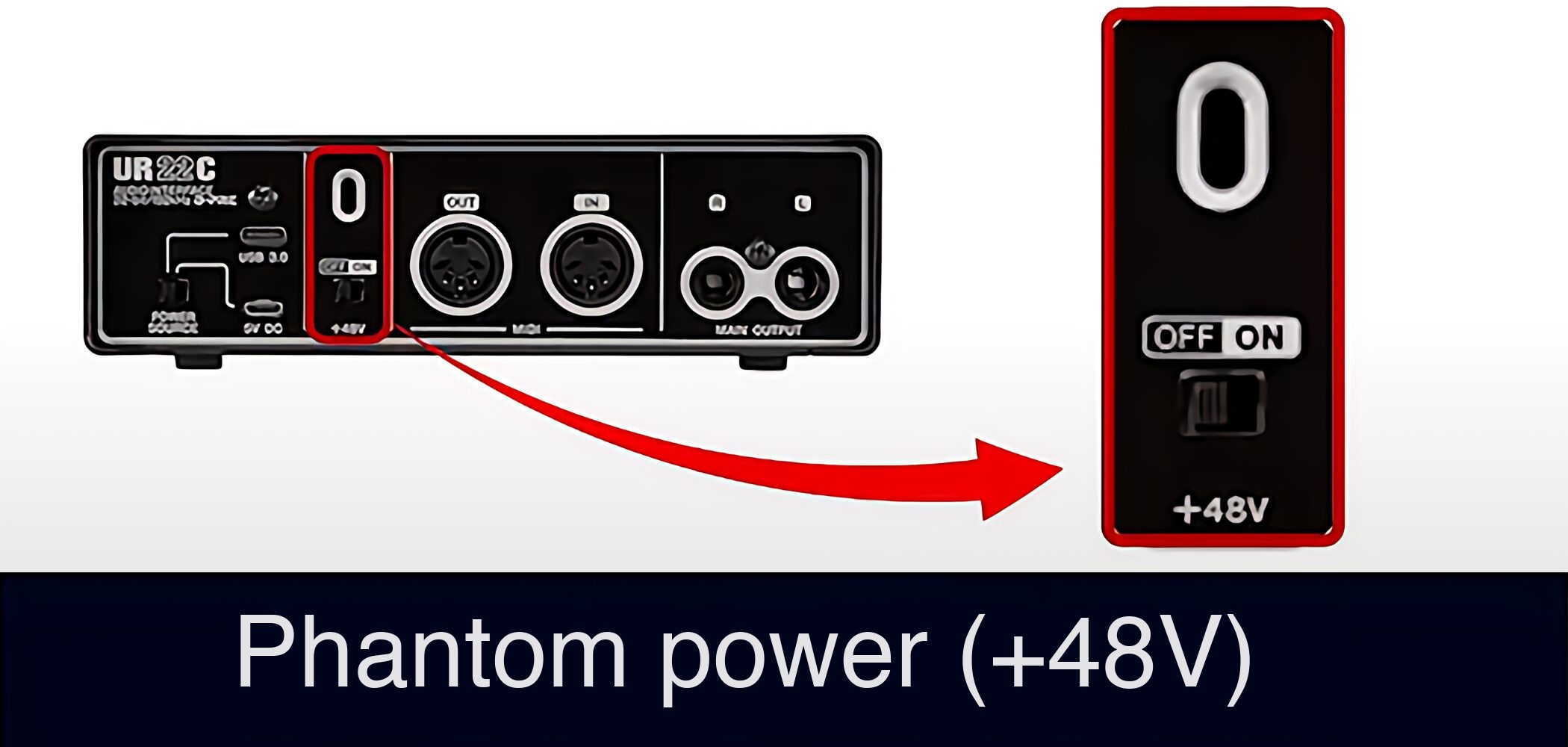
When using a condenser microphone that requires it, turn on the audio interface's +48 V phantom power switch.
For safety, connect the microphone cable first, then turn on phantom power.
Plugging or unplugging a cable while power is on may damage the microphone.
Top five microphones among music producers
No. 1: SHURE SM series
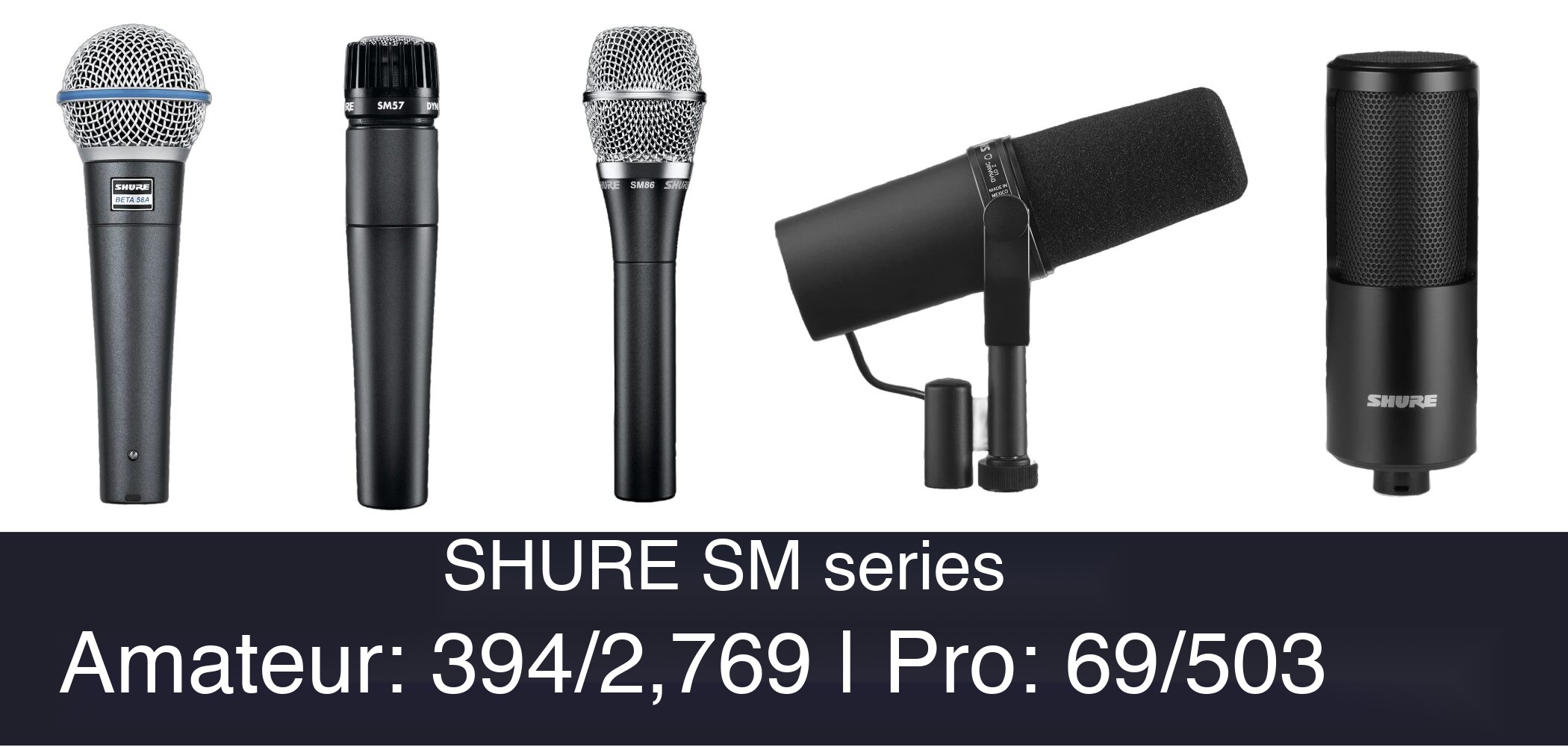
The top spot went to SHURE's SM series.
The SM58, in particular, is a byword for dynamic vocal microphones.
It is so common in live venues and rehearsal studios that music stores often recommend it as a first microphone, thanks to its ruggedness and reliability.
The popular SM57 is described as having a tighter pickup pattern than the SM58, helping reject unwanted sound.
It is trusted for close-miking specific sources such as guitar amplifiers and snare drums and is standard equipment in many studios.
No. 2: Audio-Technica AT series
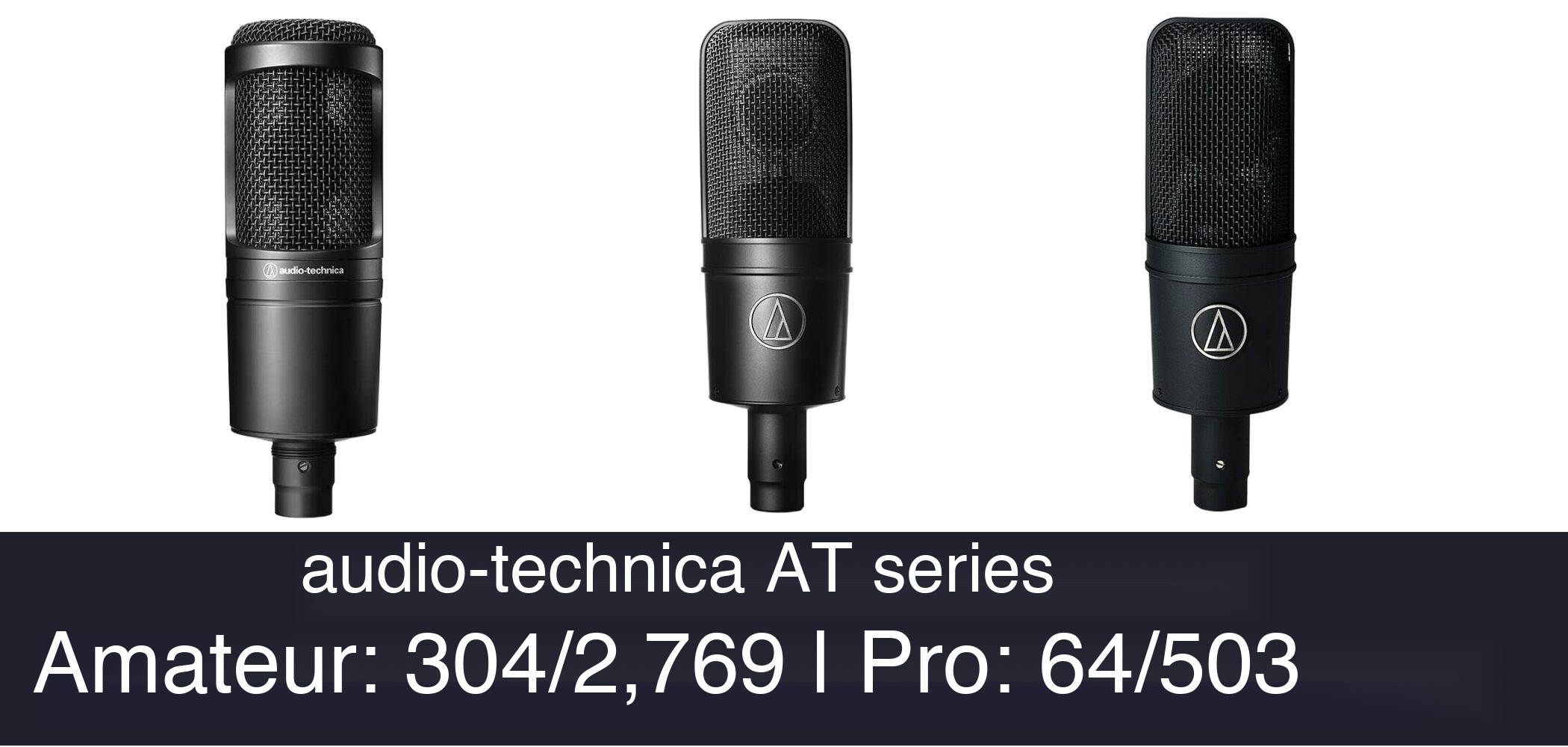
In second place is Audio-Technica's AT series, known for value for money.
One especially popular model is the AT2020, which, at around ¥15,000 in Japan at the time of the article, offers the clear, detailed sound associated with condenser microphones.
It is suitable for vocals and acoustic guitar and has also been popular for live streaming because of its balance of convenience and sound quality.
The AT4040, designed around the long-running AT4033A, is popular with users seeking more serious recording and provides wider dynamic range and higher resolution.
Its Japanese price was around ¥40,000 at the time; its sound quality has been praised as offering value at or above that price.
No. 3: RØDE NT series

Third place went to the NT series from Australian manufacturer RØDE.
The particularly popular NT1-A is known as a condenser microphone with extremely low noise, made using RØDE's manufacturing technology.
It is easy to use and is often sold in a package with a pop filter, shock mount, and cable, making it a recommended option for beginners ready to start recording vocals seriously.
No. 4: AKG C series

Fourth is AKG's C series, known for its distinctive crisp, bright character.
A particularly popular model is the C214, which captures sound nuances accurately and works well for vocals as well as instruments such as acoustic guitar and percussion.
It also has a −20 dB pad and a low-cut switch, giving it flexibility with strong-attack sources such as drums and a variety of other recording sources.
The higher-end C414 XLII is widely used in professional settings and installed as a standard microphone in many commercial studios, with a well-established reputation for sound quality and reliability.
No. 5: Sennheiser E series
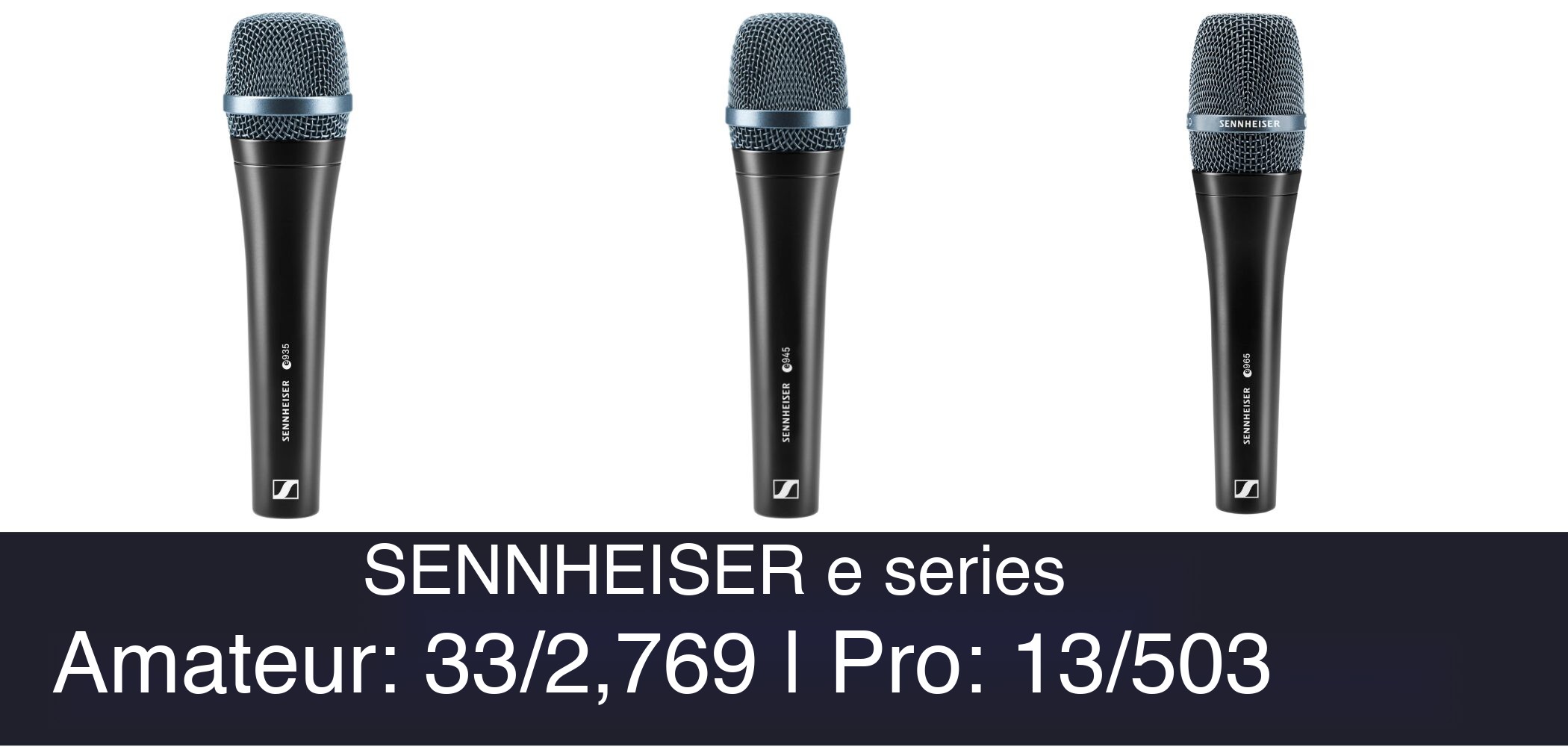
The Sennheiser E series takes fifth place.
Its popular e945 is especially favored by vocalists; its sharp supercardioid pattern helps reject unwanted sound away from the front of the microphone.
That helps deliver clear vocals even in loud environments such as a live stage.
It also covers a wide frequency range and has good dynamic range, giving it the ability to convey expressive performances faithfully.
Top five microphones used by professionals

Next are the microphones professional users reported using in their work.
The SHURE SM series was excluded from this ranking as a “hall of fame” choice. Interestingly, all five remaining microphones were condensers.
It could be called a ranking of condenser microphones chosen by professionals.
NEUMANN U 87 Ai

Finally, let's briefly introduce the NEUMANN U 87 Ai, which placed third among professional users.
Recording engineers and artists trust it so widely that it is often described as being found in almost every commercial studio: an industry-standard vocal microphone at the top of its class.
Its Japanese price was around ¥400,000 at the time of the article, but its sound quality and expressiveness have made it a first choice to try for many vocal recordings—a true classic.
Conclusion
As we have seen, each microphone has its own strengths and characteristics.
If you are considering buying one, start by thinking about:
- What you want to record (vocals, acoustic guitar, electric guitar, and so on)
- The sound you want (clear and detailed, powerful and full, and so on)
- Your budget
Considering these points together and choosing a microphone that fits your workflow is an important first step toward improving your recordings.
Use this guide to find the right partner for your music.
Sleepfreaks-supervised music production computers
In collaboration with Thirdwave, we released Sleepfreaks-supervised computers designed for music production. Built with recommended music production specifications in mind, the range includes an entry model for people starting out and a high-end model designed for maximum comfort and speed.
Frequently asked questions
Q1. Do I always need a microphone to start making music?
It depends on your workflow. If you use only software instruments and Vocaloid, you do not need one; if you want to add a live performance such as your own voice or an instrument, you will need a microphone.
Q2. Is a dynamic or condenser microphone better for recording vocals?
A condenser microphone is a strong choice: its sensitivity captures details such as breath clearly and can produce a vocal sound that cuts through. It requires care around moisture and impacts and typically needs phantom power.
Q3. What happens if I confuse microphone and instrument cables?
You may introduce noise or prevent the equipment from working correctly. Standard microphone cables use balanced XLR connections, while instrument cables typically use unbalanced TS connections, so choose the correct cable for the application.
NEW ARTICLES
Latest English Articles