
This article explains arrangement techniques using the feedback function of a delay effect. It shows how setting the feedback above 100% creates endless repeats and how to control this effect dynamically during the song with automation. By also modulating the delay time at the same time, you can change the pitch of the echoes and create unique sound effects. It covers how to set up automation in each DAW, offering practical techniques for producers who want tricky, distinctive sound design.
Create arrangements with repeating echoes
The "delay" creates an echo effect on a track.
In most cases, it is used as a spatial effect to adjust dimension and depth.
Here, we introduce a somewhat tricky arrangement technique
using "Feedback," which determines the number of echoes.
"Sound"
Creating the sound
Excerpt of a question and answer from the YouTube video

With Cubase's included delay, the pitch didn't change. Was I applying it wrong?

With Cubase's stock Delay, it's true that you can't get the intense effect shown in the video. So we suggest looking for a delay that gives you the sound you like. Turning off "Sync" for the delay time should get you a little closer. Please give it a try.
Purchase the product: https://bit.ly/2V1GeXB
Control feedback with automation
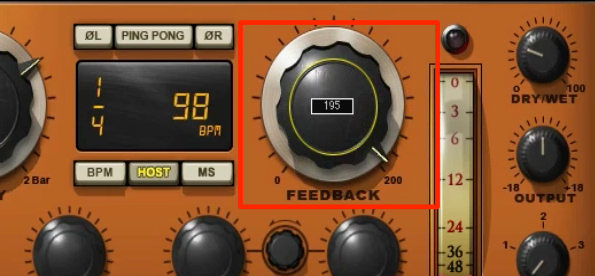
Setting "Feedback" above 100% gives you never-ending repeats.
Take advantage of this by recording "feedback automation" in the song.
Raise the value where you want the effect,
and set it to zero or lower it where it isn't needed.
How to use automation in each DAW

 Logic
 GarageBand
 Cubase
 Ableton Live
 Studio One
 FL Studio
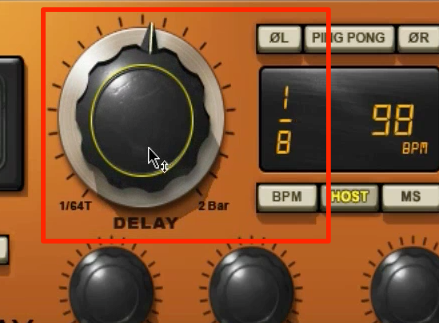
"Delay Time" adjusts the interval between echoes.
If you move "Delay Time" where "Feedback" is high,
the pitch of the echoes changes, giving a very interesting effect.
It's well suited to sound effects.
Frequently asked questions
Q1. What happens when delay feedback is set above 100%?
Setting feedback above 100% creates endless repeats. Controlling this with automation lets you create striking effects in specific parts of the song.
Q2. Where can feedback automation be used?
It's especially suited to creating sound effects and is effective in choruses or breaks that call for drama. We recommend using it in parts you want to stand out, such as transitions and fills.
Q3. What is the benefit of changing the delay time at the same time?
Moving the delay time (echo interval) while feedback is high changes the pitch of the echoes, producing very interesting effects. It enables creative sound design you can't get from ordinary delay effects.
NEW ARTICLES
Latest English Articles











