A survey of 3,272 people who make music on computers has revealed the five most popular speakers. The most chosen is the YAMAHA MSP series, followed by the HS series, Mackie CR, IK MULTIMEDIA iLoud Micro Monitor and the ADAM AUDIO AX series. Amateurs tend to value cost-performance and versatility, while professionals favor YAMAHA products and high-end monitors. The article covers not only how to choose speakers but also how to set them up properly after purchase, including distance from the wall and angle, offering practical information for everyone from beginners about to buy their first speakers to professionals reviewing their current setup.
The Most Popular Speakers: Survey Results
Here are the results of the equipment survey we recently conducted.
A total of 3,272 people responded, broken down into amateurs and professionals as follows.
- 2,769 people active in music as amateurs (about 85%)
- 503 people active in music as professionals (about 15%)
Please keep this in mind as you look at the results.
People Who Do Not Use Speakers
The number of people who do not use speakers when producing music on a computer was as follows.
- Amateurs: 1,122 (about 40%)
- Professionals: 47 (about 9%)
The growing trend of producing with earphones or headphones shows especially clearly among amateurs.
Along with the ranking, we also cover speaker setup, so we hope this is helpful if you are about to bring speakers into your setup.
No. 1: YAMAHA MSP Series (269 people)

Product URL: https://yamaha.io/2R7e8bG
209 amateurs and 60 professionals, for a total of 269.
The most popular model is the MSP5 STUDIO, chosen by 103 amateurs and 35 professionals, for a total of 138.
It offers an excellent balance of price and performance (sound) and handles every musical genre.
It is a product we can recommend if you are not sure what to buy as your first speakers.
No. 2: YAMAHA HS Series (200 people)

Product URL: https://yamaha.io/2FlK1KT
154 amateurs and 46 professionals, for a total of 200.
The most popular model is the HS5, chosen by 117 amateurs and 31 professionals, for a total of 148.
Like the MSP series above, it allows well-balanced monitoring.
The MSP series has a tight sound image, while the HS series sounds deeper and more relaxed.
It really comes down to personal taste, but after comparing the two, I currently use the HS series.
The sound simply never tires me out, and I am also happy with it as a listening speaker.
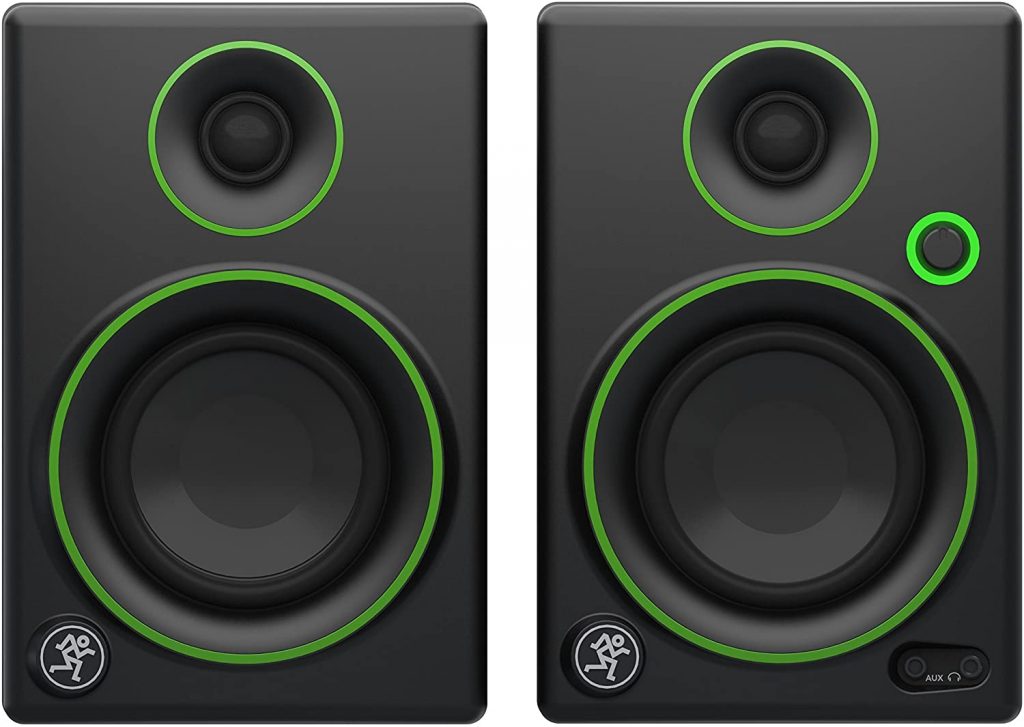
No. 3: Mackie CR Series (103 people)
Product URL: https://bit.ly/3heNici
96 amateurs and 7 professionals, for a total of 103.
The most popular model is the CR3, chosen by 90 amateurs and 7 professionals, for a total of 97.
This one was completely off my radar.
It has enormous support from amateurs and is especially well known for its cost-performance.
It also supports wireless playback over Bluetooth, so it looks handy in situations where mobility matters.
No. 4: IK MULTIMEDIA iLoud Micro Monitor (93 people)

Product URL: https://bit.ly/3icaTvF
73 amateurs and 20 professionals, for a total of 93.
When this product was released, it was genuinely shocking.
Despite its compact size, it reproduces lows and highs solidly, with sound quality good enough for mixing.
It also supports Bluetooth, so you can take it anywhere and produce.
At our office, it is used as a monitor for YouTube live streams and during meetings.
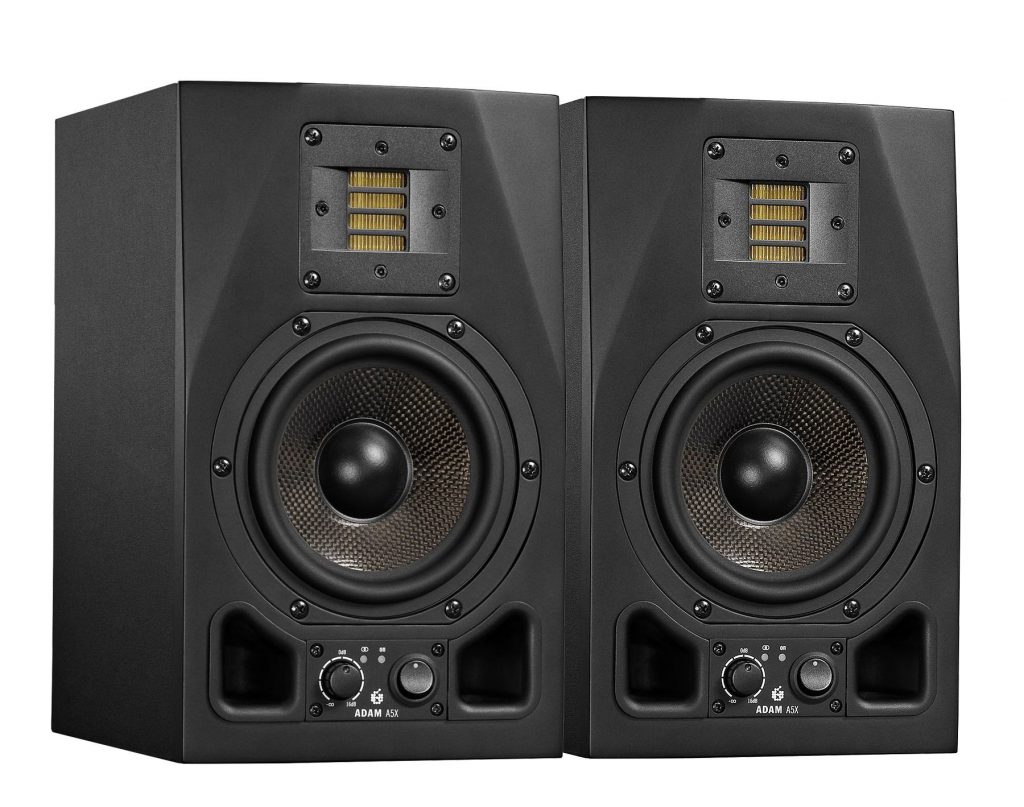
No. 5: ADAM AUDIO AX Series (67 people)
Product URL: https://bit.ly/32aJ29n
◆ Giveaway campaign: answer the survey for a chance to win an AX7 (one winner)
(until October 11, 2020)
https://bit.ly/2FqDr6c
37 amateurs and 30 professionals, for a total of 67.
The most popular model is the A7X, chosen by 11 amateurs and 16 professionals, for a total of 27.
The A5X from the same series was a close second, with 18 amateurs and 8 professionals, for a total of 26.
As the very high share of professionals suggests, these are fully professional speakers with very high resolution from the lows to the highs.
They are expensive, but well worth the price, and I would recommend them if you are looking for high-quality speakers you can use for a long time.
I bought a pair of A7X speakers twice, yet for some reason they are now at the home of our instructor Miyagawa.
Top Speakers Used by Professionals
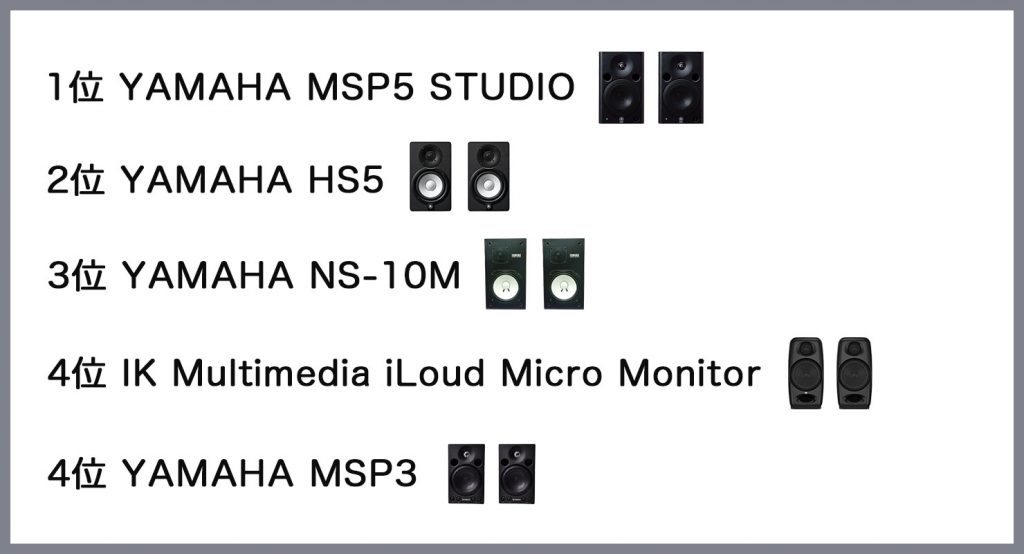
- YAMAHA MSP5 STUDIO (35 people)
- YAMAHA HS5 (31 people)
- YAMAHA NS-10M (28 people)
- IK MULTIMEDIA iLoud Micro Monitor (20 people)
- YAMAHA MSP3 (20 people)
YAMAHA products are clearly dominant. The NS-10M is a standard monitor speaker in recording studios as well.
The iLoud Micro Monitor, valued for its portability, also made the list.
Key Points for Setting Up Speakers
From here, we explain how to set up your speakers so you get the most out of their performance.
Be sure to check these points to monitor your sound more accurately.
Where to Place Them
Low frequencies are not very directional, so they spread vaguely into the surroundings.
If the speakers are right up against a wall, sound reflects off the wall and the lows in particular are boosted.
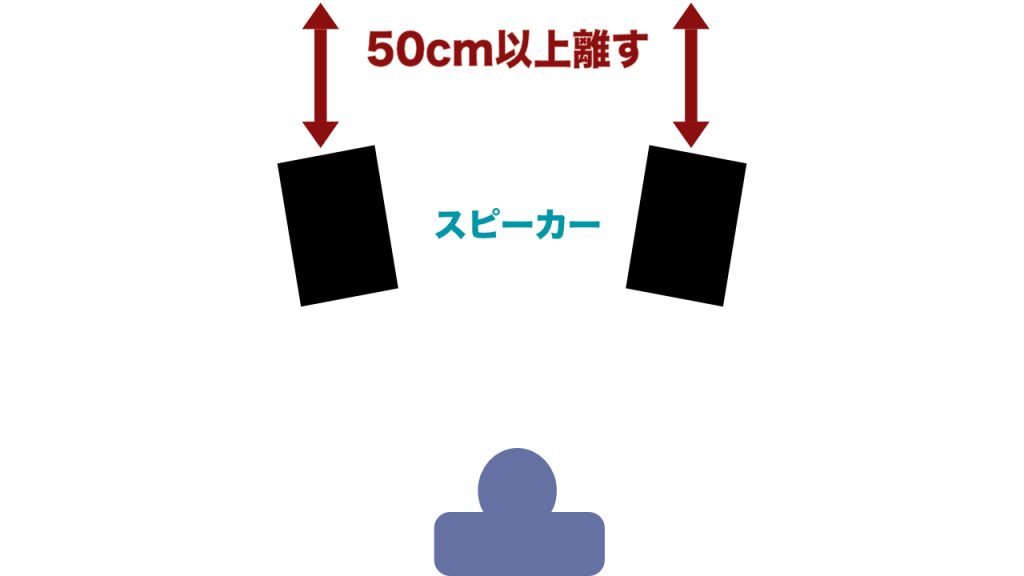
For this reason, we recommend placing the speakers at least 50 cm away from the wall.

Models with a bass reflex port on the back are especially affected by the wall.
Please keep this in mind.
Angle Them Instead of Facing the Wall Squarely
Sound waves from the speakers bounce repeatedly off the walls, ceiling and floor.
Monitoring in an environment with this many reflections makes fine nuances harder to hear and causes phase problems.
Dealing with these reflections is important for building a good monitoring environment.
The quickest way to reduce reflections is to angle the speakers inward.
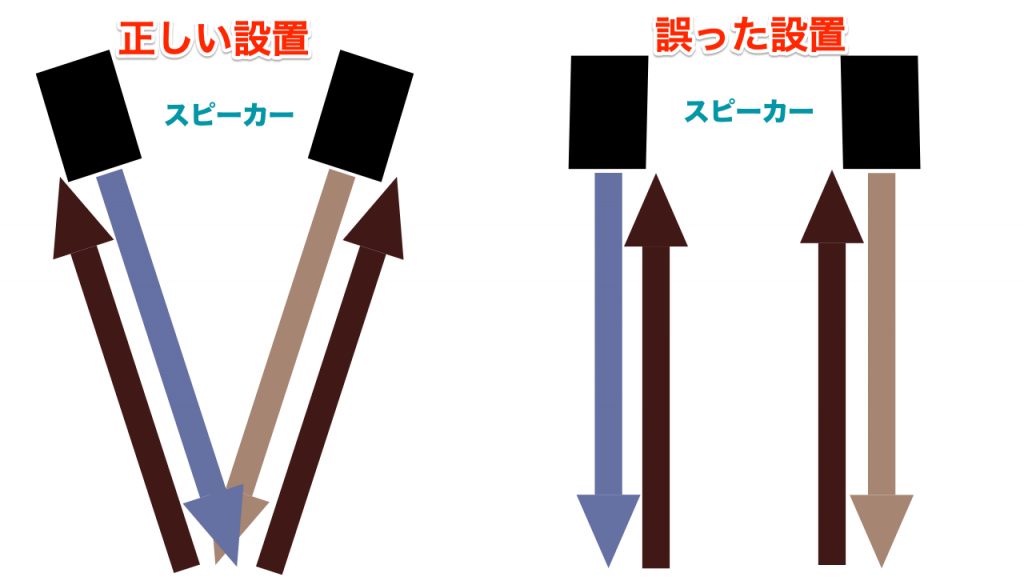
Angling them like this makes them less susceptible to reflections (flutter echo) from behind the listening position.
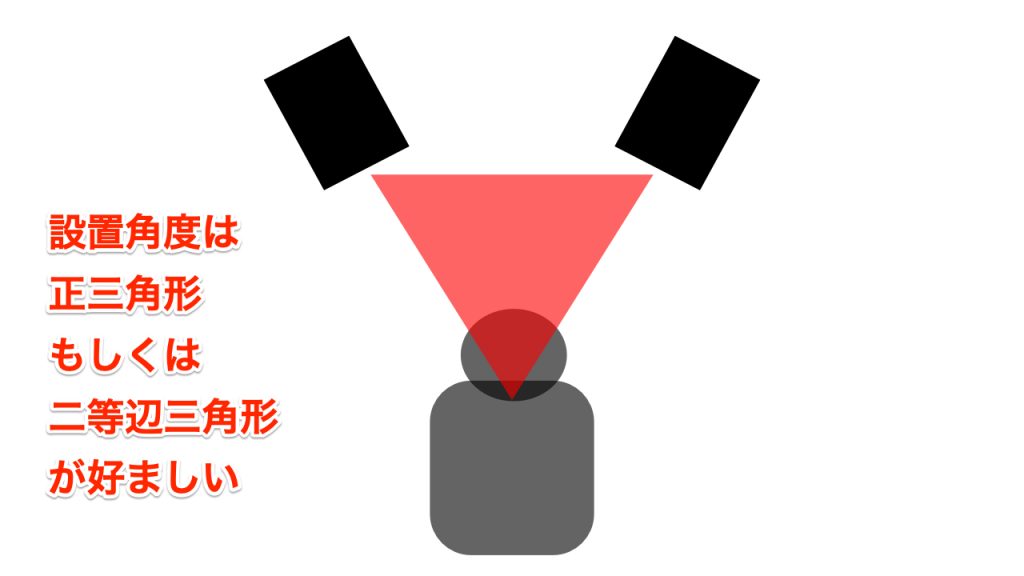
Also, so that you can properly check the stereo image (width), place them so that they form an equilateral to isosceles triangle with the listening position.
Place the Tweeters at Ear Height
High frequencies are very directional, so adjust the height so the sound reaches your ears directly.
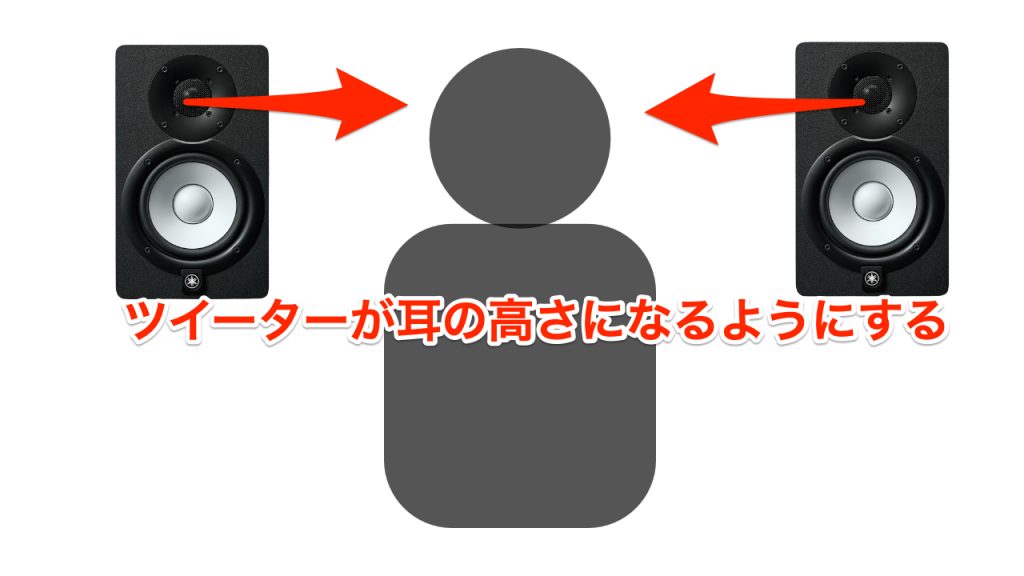
It is best to set them so the part called the tweeter is at the same height as your ears.
Install Acoustic Absorption Panels
As mentioned above, the wall behind the speakers and the walls on either side send strong reflections to the listening position.
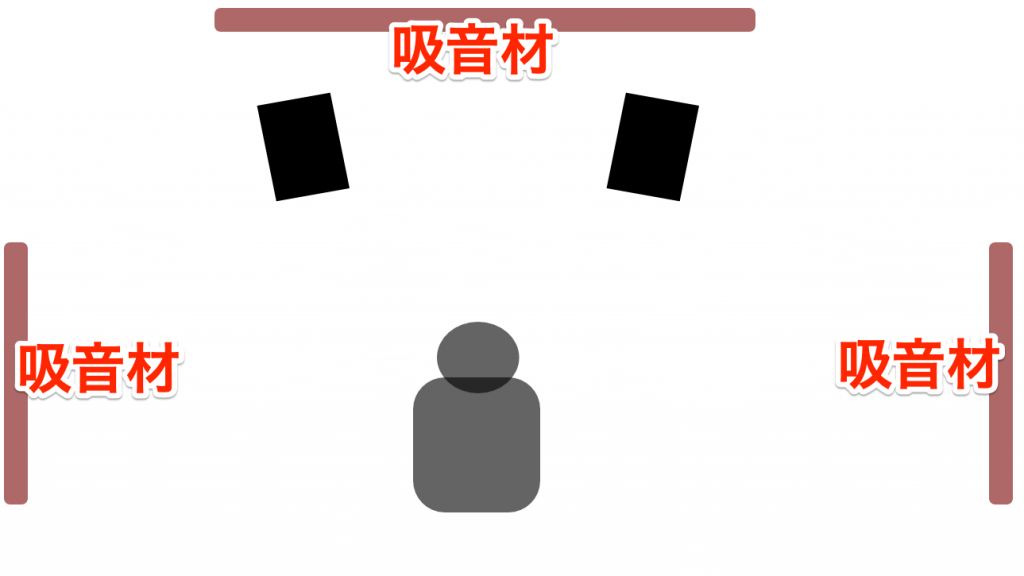
By installing absorption panels at these three points to suppress reflections, you can expect the sound to improve.
We also recommend placing absorption panels on the wall behind the listening position.
The effect is not as large as for the walls, but treating the ceiling and floor improves the monitoring sound even further.
For the floor, even laying down a rug is effective.
Use Isolators When Placing Speakers on a Desk
Isolators are accessories that prevent vibration from being transmitted. They are used to stop speaker vibration from traveling into the surface they sit on.
Preventing this resonance can improve the sound.
Wooden desks in particular tend to resonate with the speakers, which is where isolators really show their effect.
As long as you can prevent this vibration, you do not need to be particular about isolators.
For example, stacking 10-yen coins and setting the speakers on top of them is also an effective way to deal with vibration.

- View on Amazon Japan
- View on Rakuten Japan
- View at Sound House
There are also dedicated stands for placing speakers on a desk (we use them in the video).
Like isolators, these products are designed to prevent resonance.
Use a Speaker Calibration Plug-in
Unless your studio was designed for music production, the room's characteristics and speaker positions will inevitably impose limits.
A powerful tool for solving these problems is a speaker calibration plug-in.
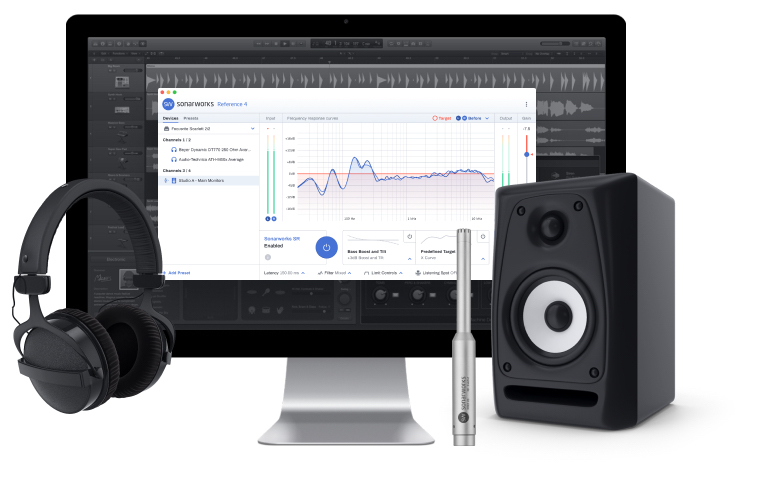
With a simple process that takes a few dozen minutes, it analyzes your room and speakers and optimally corrects frequency response, phase and more.

DTM gear survey, part 3 📝
🔈 Which speaker (monitor speaker) is No. 1?🎉 Announcing the top 5 from 3,272 DTMers 🎉
- Amateurs: 2,769
- Professionals: 503We also reveal the ranking of speakers used by professionals!
Read more: https://t.co/wbsoUGIzH6#DTM #DAW #speakers pic.twitter.com/hEjeojFkjw
— SLEEP FREAKS (@SLEEPFREAKS_DTM) September 25, 2020
Frequently Asked Questions
Q1. What speakers should a DTM beginner buy first?
The YAMAHA MSP5 STUDIO is the most popular. It offers an excellent balance of price and performance and handles every genre, making it an ideal first choice if you are unsure what to pick.
Q2. Can I produce music using only headphones?
Yes, but statistics show that about 40% of amateurs and only about 9% of professionals do not use speakers, so professionals tend to put more weight on speakers. We recommend adding speakers for final sound checks.
Q3. What are the most important points when setting up speakers?
It is important to keep them at least 50 cm away from the wall and angle them inward. This reduces reflections and gives you an accurate monitoring environment.
Q4. Which monitor speakers do professionals use most?
The YAMAHA MSP5 STUDIO is used by the most, with 35 people. It is followed by the HS5 (31) and the classic NS-10M (28), showing how much professionals trust YAMAHA products.
Q5. I am looking for compact, portable monitor speakers.
The IK MULTIMEDIA iLoud Micro Monitor is a good fit. Despite its compact size, it reproduces highs and lows accurately, and Bluetooth support lets you produce anywhere. It was also chosen by 20 professionals.
NEW ARTICLES
Latest English Articles