Neumann's MT 48 is a professional recording interface with a touchscreen that lets you shape your sound from the unit itself. Its low equivalent input noise (EIN) supports clean recording, while four independent mixers provide flexible monitoring. Onboard DSP offers low-latency effects and simultaneous recording of processed and dry signals. ADAT, AES67, and optional Dante connectivity offer expansion for settings ranging from home studios to professional facilities.
A professional interface that lets you shape your sound on the unit

This time we introduce the MT 48 audio interface from Neumann, the company known for the U87 Ai microphone.
Even some time after its release, it continues to earn praise for its sound quality.
We'll look at the features that make the MT 48 appealing to creators and the functions that make music production more comfortable.
Singer-songwriter Saeya appears as the vocalist in the recording scenes in our video.
Please also check out Saeya's work.
Saeya / @saenaiyoruni
Saeya on lit.link (profile)
Neumann MT 48 review video
Intuitive controls that help you focus on recording
With a typical audio interface, you may find yourself going back and forth to the computer for detailed adjustments after connecting a microphone or instrument.
With the MT 48, most settings can be handled on its touchscreen.
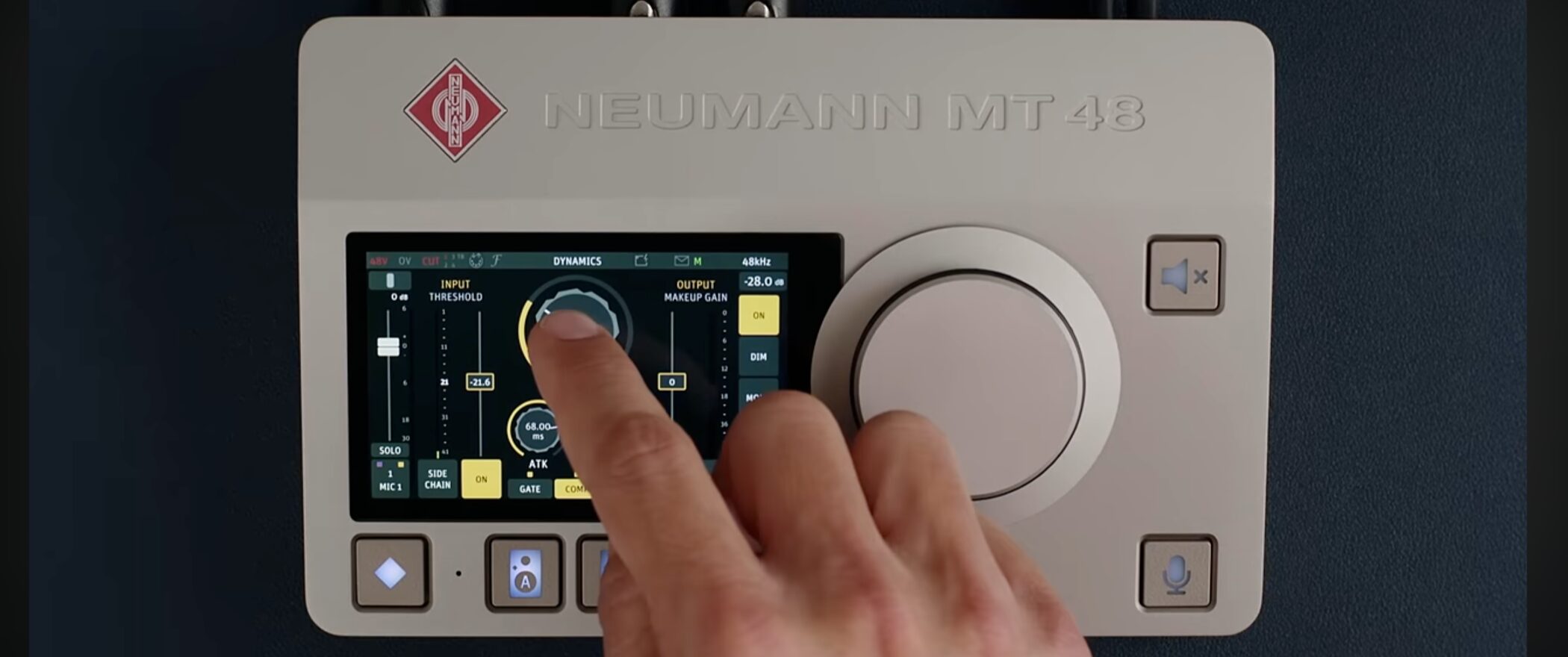
You can select input sources and adjust settings such as low-cut filters and phantom power with a tap.
Fine parameters and volume can be adjusted with the jog dial, allowing you to shape your sound at the unit before moving to your DAW.

A computer control application is also available, offering the same operations as the unit's screen as well as saving and recalling settings.
Plentiful inputs, outputs, and flexible connectivity
The MT 48 has connections for a variety of production setups.

On the rear are two XLR/TRS combo inputs for microphones and line signals.
Outputs include one stereo XLR pair and one stereo TRS pair, making it easy to switch between multiple speaker outputs and useful for routing to outboard equipment.
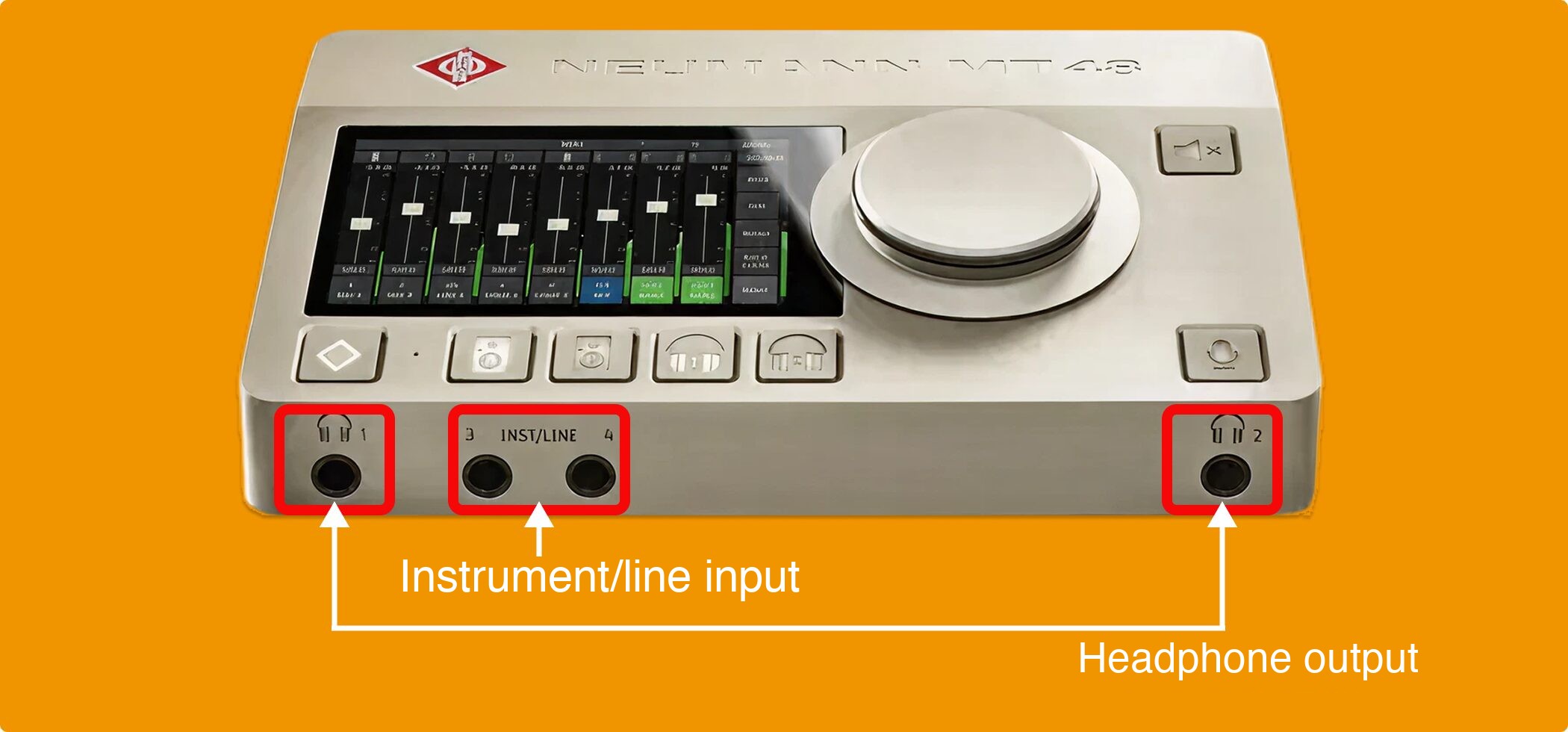
The front panel has two mono instrument/line inputs for easy connection of guitars and synthesizers.
There are also two headphone outputs, placed on opposite sides to make cable routing easier when two people use them at once.
Design for high-quality sound
One notable aspect of the MT 48 is its very low internal noise.

Audio interfaces have some internal noise of their own.
One measure of mainly microphone preamp noise is EIN, or equivalent input noise.

The MT 48 is designed for a very low EIN, making noise less apparent when you raise levels after recording and making editing easier.
It also helps keep noise unobtrusive when stacking multiple tracks in a production based on live recording.
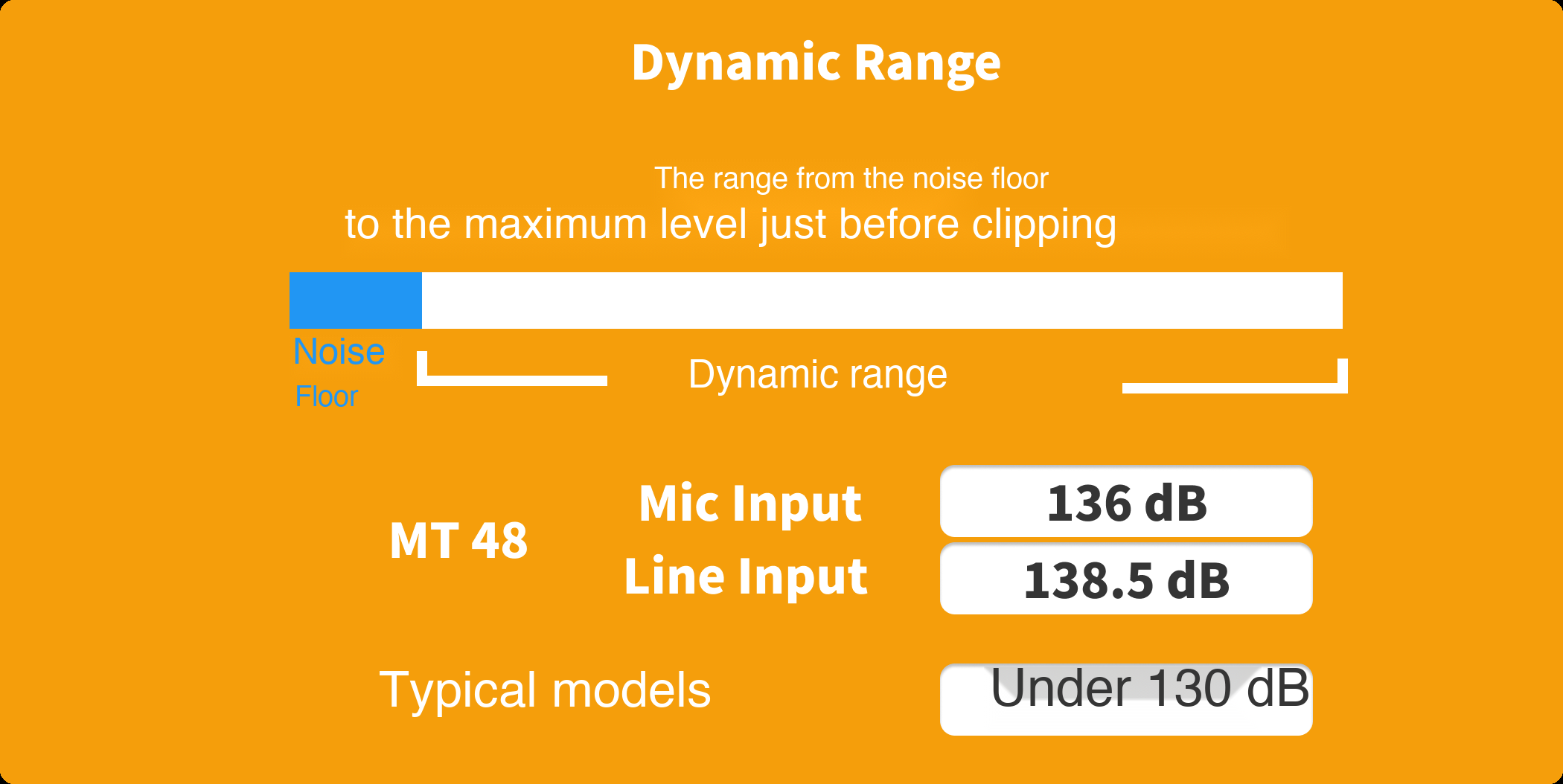
Both microphone and line inputs also provide a wide dynamic range.
Flexible monitoring for recording
The MT 48 offers powerful tools for setting up monitoring during a recording session.
Four independent mixers
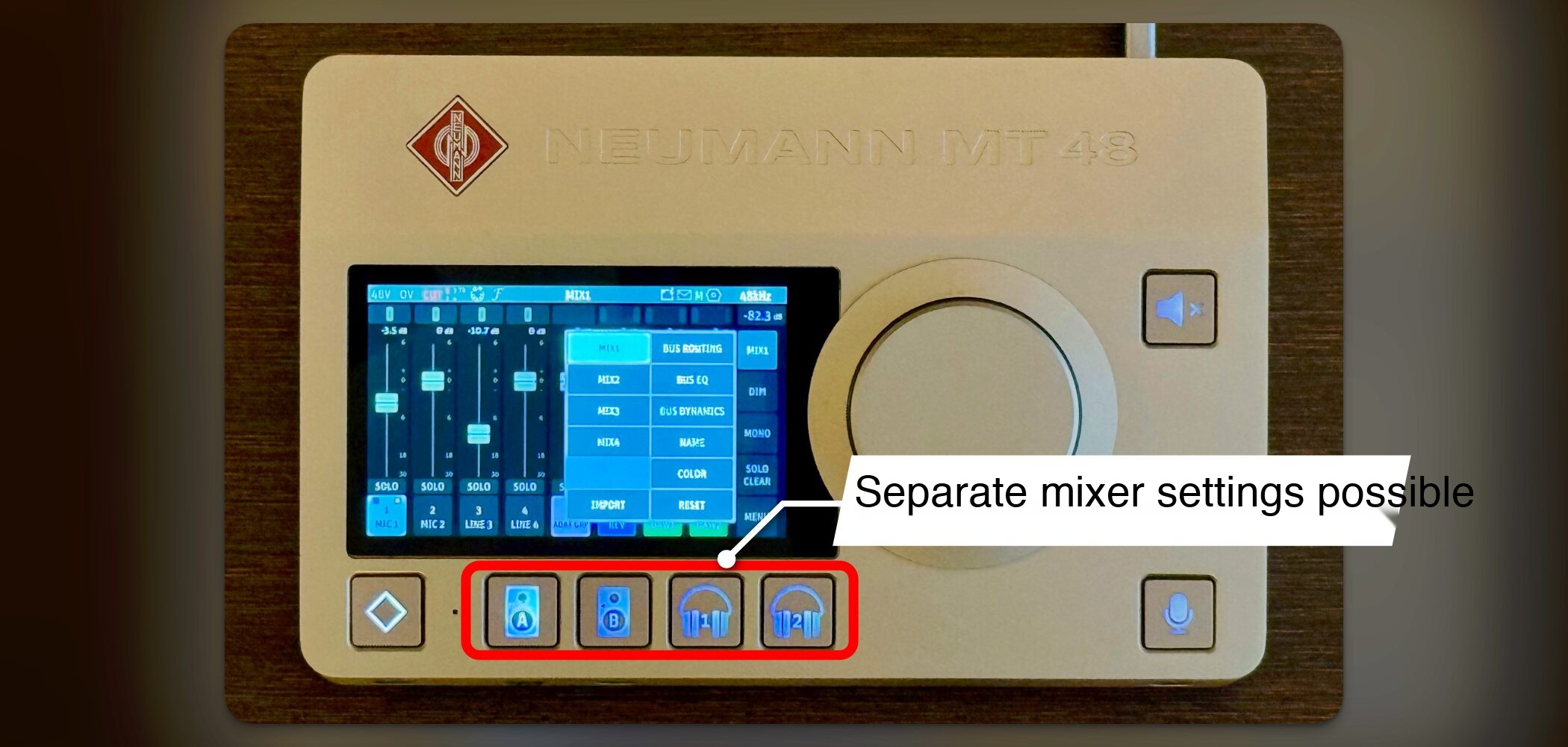
Each of the four outputs—Speakers A, Speakers B, Headphone 1, and Headphone 2—can have its own mixer settings.
For example, an engineer can listen to the overall balance while a vocalist receives a mix with more of their voice and reverb, and a guitarist hears more of their own guitar.
Powerful headphone outputs
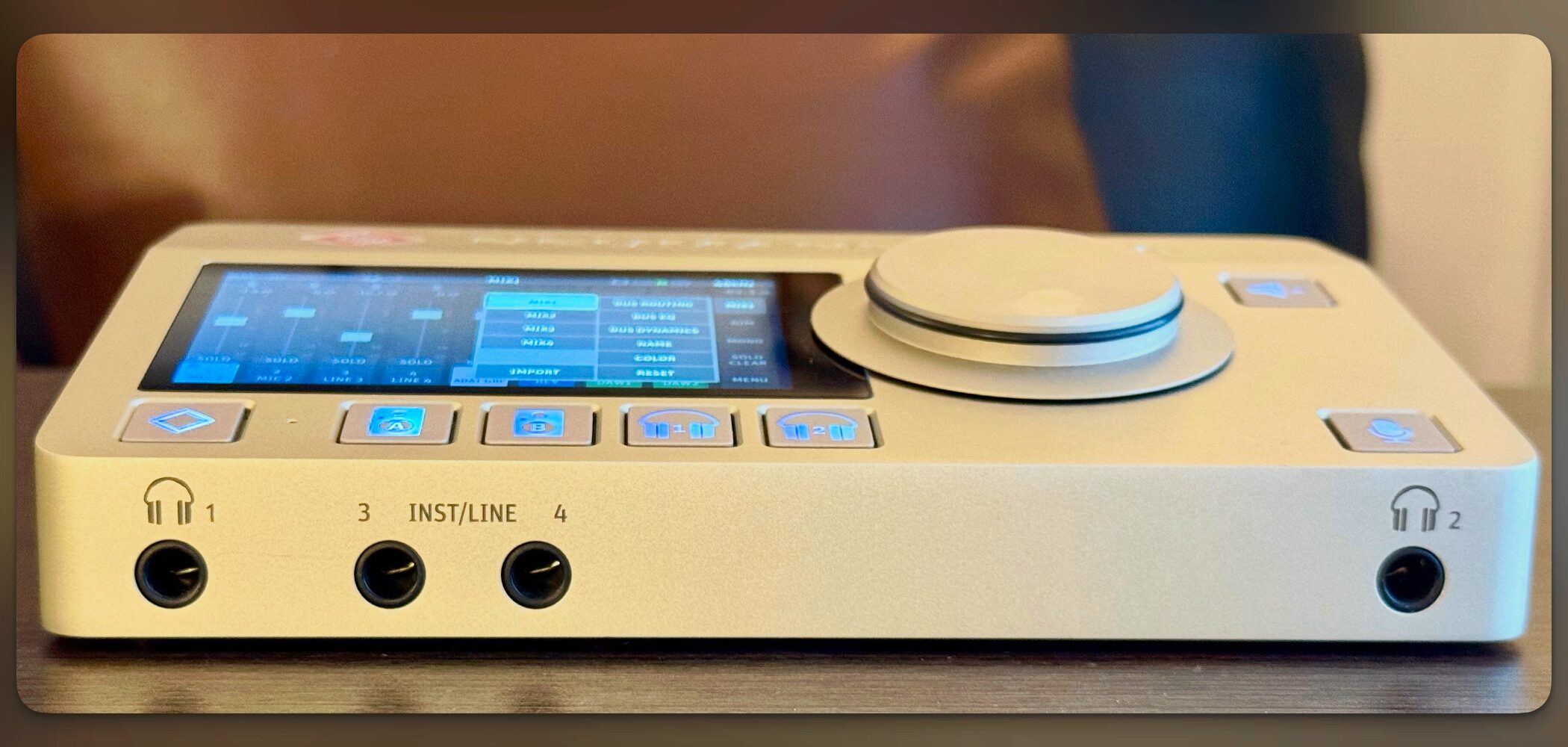
The MT 48's headphone outputs have enough drive for high-impedance headphones.
Many high-end headphones have a high impedance, or electrical resistance.
Some audio interfaces cannot provide sufficient volume for such headphones, but the MT 48 can drive them effectively.
This is due to its high-output headphone amplifier and very low 0.035 Ω output impedance.
Built-in effects with plug-in-like control
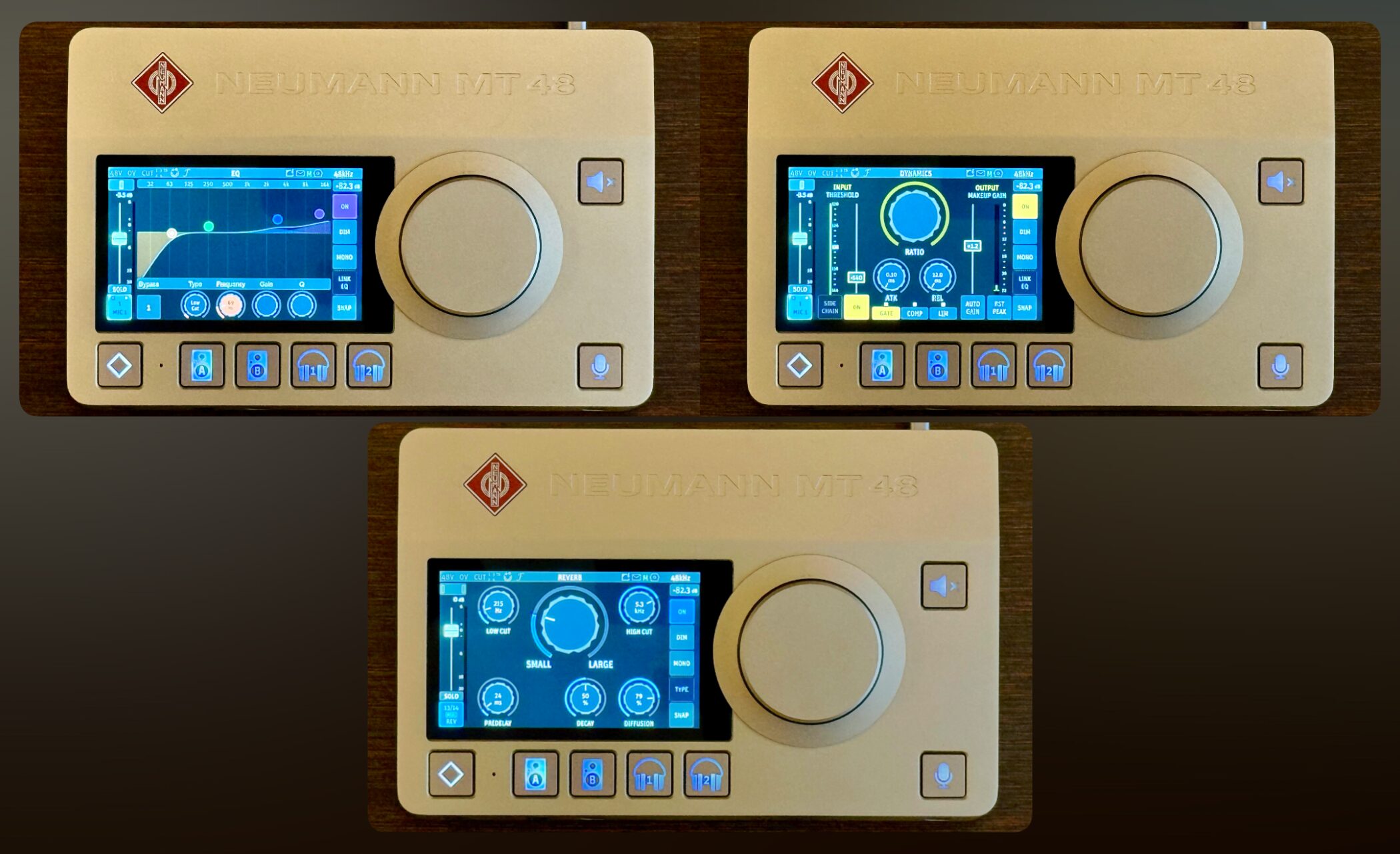
Each channel offers a four-band parametric EQ, dynamics with gate, compressor, and limiter modes, and reverb for monitoring.
Detailed parameter adjustments are available much like DAW plug-ins. For vocal recording, adding reverb to the monitor mix can help the singer perform comfortably.
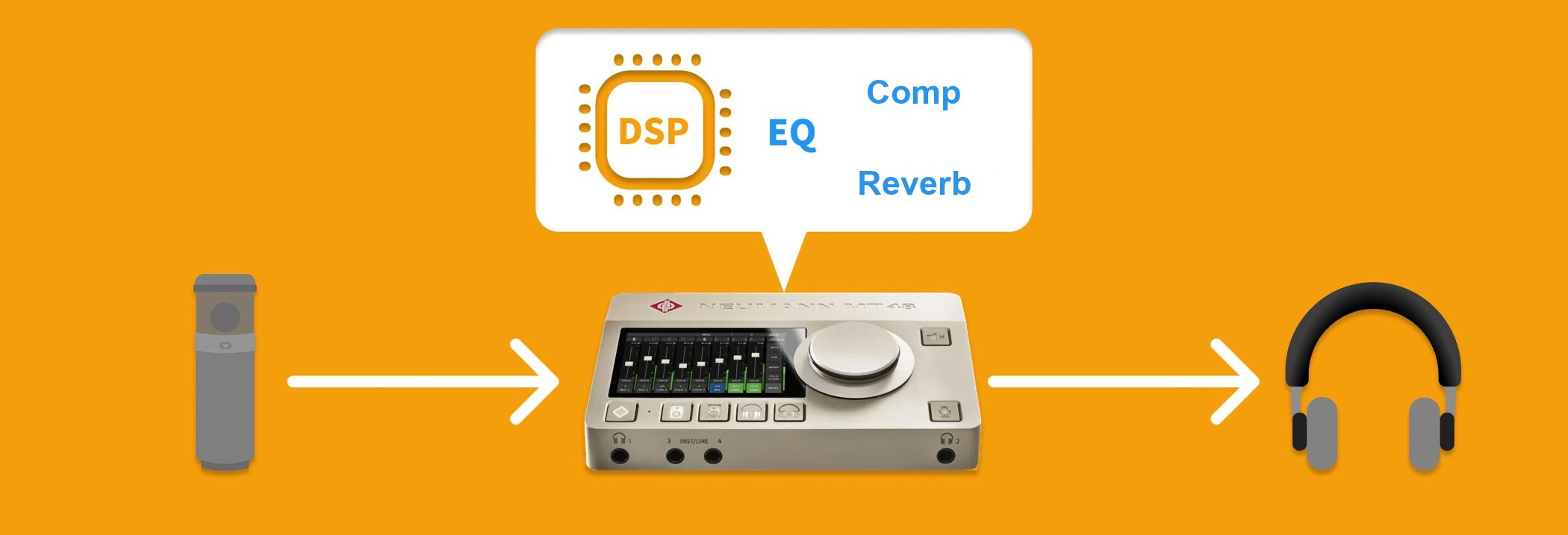
These effects are processed by onboard DSP, so you can shape sounds with low latency without adding load to the computer's CPU.
Record processed and dry signals simultaneously

For EQ and dynamics, the interface can send both the processed sound and the dry signal to the DAW at the same time.
Select Dual Output in the USB settings and each input is sent as separate wet and dry tracks; two inputs produce four tracks.
For example, you can record with assertive compression while keeping the dry signal as a backup.
Digital I/O and room to expand
The MT 48 can accommodate not only your current setup but future system expansion.
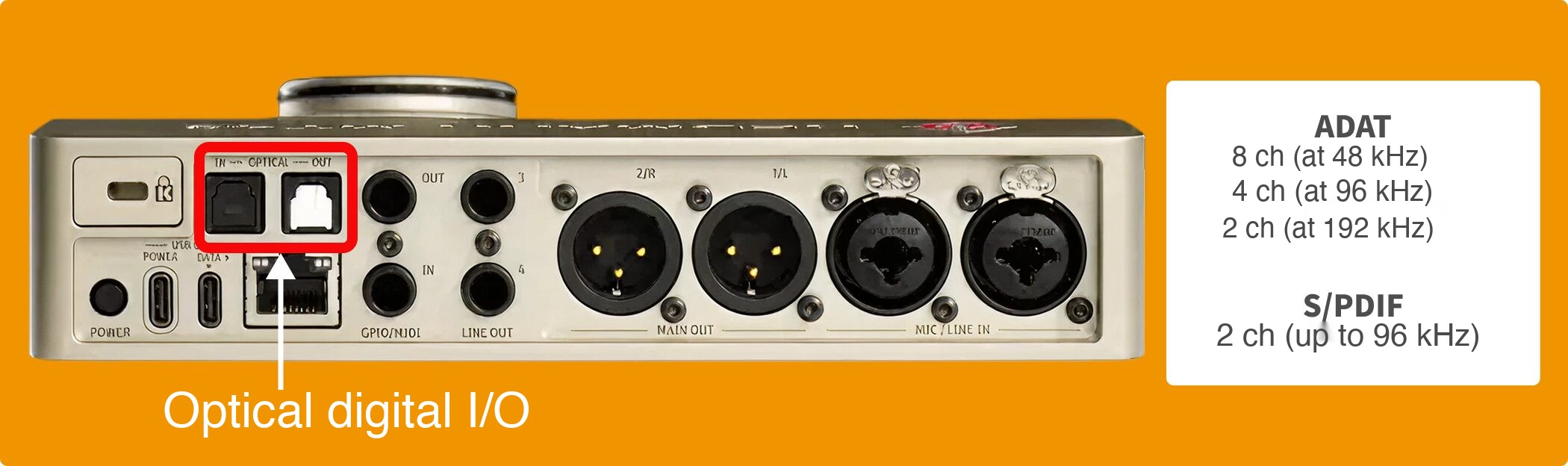
In addition to four analog inputs and four analog outputs,up to eight channels of I/O can be added via ADAT.
For example, you can add microphone preamps to increase the number of inputs, even in a home studio.

It also supports the network audio standard AES67 as standard.
The optional Dante.
Network audio can send and receive many channels simultaneously, making it useful for large recording sessions.
This flexibility makes the MT 48 suitable for a broad range of needs over time.
Specifications
| MT 48 specifications | |
|---|---|
| Sample rate | 44.1–192 kHz |
| Bit depth | 24–32 bit |
| Microphone / line inputs | 2 XLR/TRS combo inputs |
| Hi-Z / line inputs | 2 TRS inputs (6.3 mm, instrument/line) |
| Main outputs | 2 XLR channels (maximum output level +24 dBu) |
| Line outputs | 2 TRS channels (6.3 mm, maximum output level +24 dBu) |
| Headphone outputs | 2 TRS outputs (6.3 mm, independently controlled) |
| Optical digital I/O | ADAT: 8 channels at 48 kHz / 4 at 96 kHz / 2 at 192 kHz S/PDIF: 2 channels up to 96 kHz |
| Network I/O (Ethernet) | RAVENNA / AES67 supported as standard Dante: supported with an optional license |
| Microphone preamp gain | 12 to +78 dB |
| Display | Touch-enabled TFT LCD, 800 × 480 pixels |
| Power | USB-C (USB PD 3.0) or PoE+ |
| Dimensions / weight | 200 × 128 × 40 mm / 950 g |
Conclusion
In use, the MT 48 delivered recording quality we could really appreciate.
The workflow that lets you shape a sound on the unit itself is appealing too.
We particularly recommend it for singer-songwriters and people recording vocals, acoustic instruments, and other live sources.
If you already use an audio interface in the ¥100,000 class and want to aim higher, take a look.
Frequently asked questions
Q1. I often have to move back and forth to my computer when using an audio interface. Can the MT 48 help?
Yes. Its touchscreen and jog dial let you make almost all settings and shape your sound on the unit itself, reducing trips to the computer. You can adjust the microphone, EQ, phantom power, and more before moving to your DAW.
Q2. Is it suitable for vocal recording?
Yes. Its low EIN supports high-quality recording, and onboard effects including monitor reverb can create a comfortable environment for singers. Two headphone outputs also let the engineer and vocalist hear different mixes.
Q3. Can the MT 48 accommodate future studio expansion?
Yes. It can add up to eight channels via ADAT and supports network audio through AES67 and optional Dante, allowing a system to grow from a small home studio to larger sessions.
Q4. My high-impedance headphones sometimes don't get loud enough. Can the MT 48 drive them?
The MT 48 has a very low 0.035 Ω headphone output impedance and a high-output headphone amplifier, allowing it to drive high-impedance headphones at sufficient levels.
NEW ARTICLES
Latest English Articles